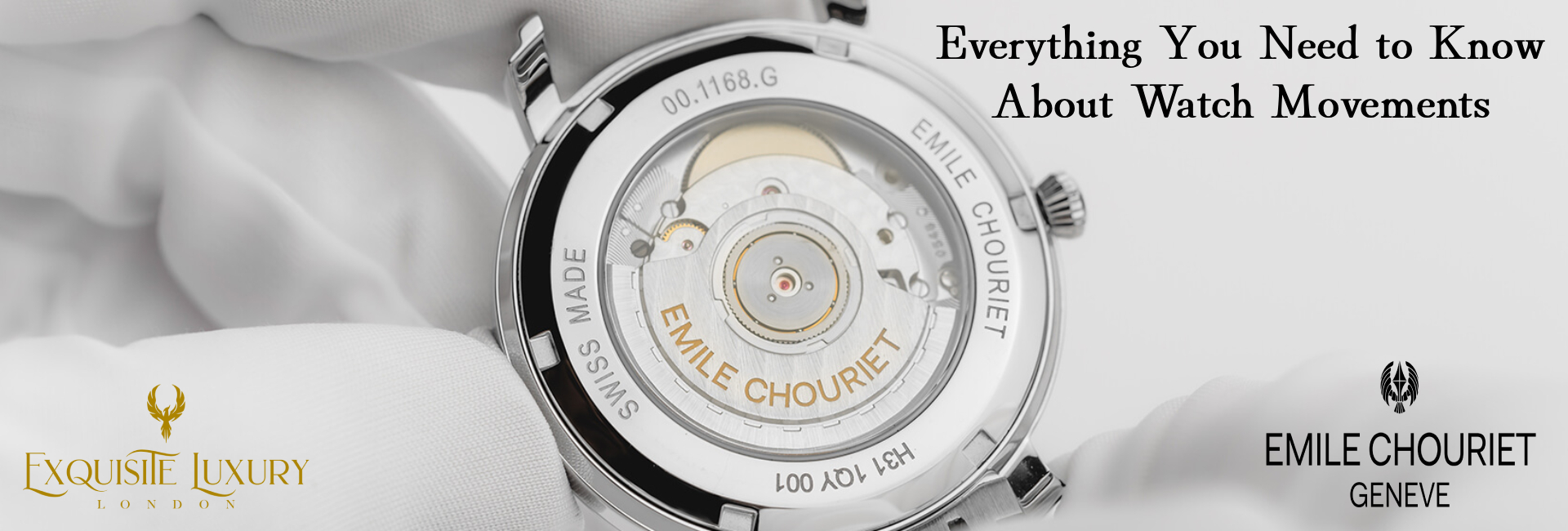
Everything You Need to Know About Watch Movements
The Symphony of Gears, Springs, and Silicon – A Journey Through Timekeeping
The Soul Beneath the Dial. A watch is more than a tool – it is a universe of tiny wonders. Every tick is a ballet of gears, every sweep of the hand a triumph of engineering. For centuries, watchmakers have chased perfection, crafting movements that range from hand-carved mechanical poems to AI-driven smart hybrids. In this guide Everything You Need to Know About Watch Movements. we will unravel the secrets of these Mechanical Movements (Hand-Wound), Automatic Movements (Self-Winding Mechanical), Quartz Movements (Battery-Powered) & Hybrid & Smart Movements. We will also explore their histories, and decode how to keep them alive for generations.
The Four Titans of Horology
-
Everything You Need to Know About Watch Movements – Mechanical Movements (Hand-Wound)
The Artisans’ Legacy. Mechanical movements are the soul of traditional watchmaking, born in an era when timekeeping was a sacred art. Imagine a 16th-century workshop: candlelit benches, brass gears, and the smell of oil. Mechanical movements began here, born from the minds of clockmakers adapting pendulum clocks into portable marvels. These movements are the Stradivarius violins of horology – meticulously assembled by hand, requiring daily interaction, and aging like fine wine. They are for those who savour ritual, who find magic in the tactile click-click of winding a crown.
Traditional Manual
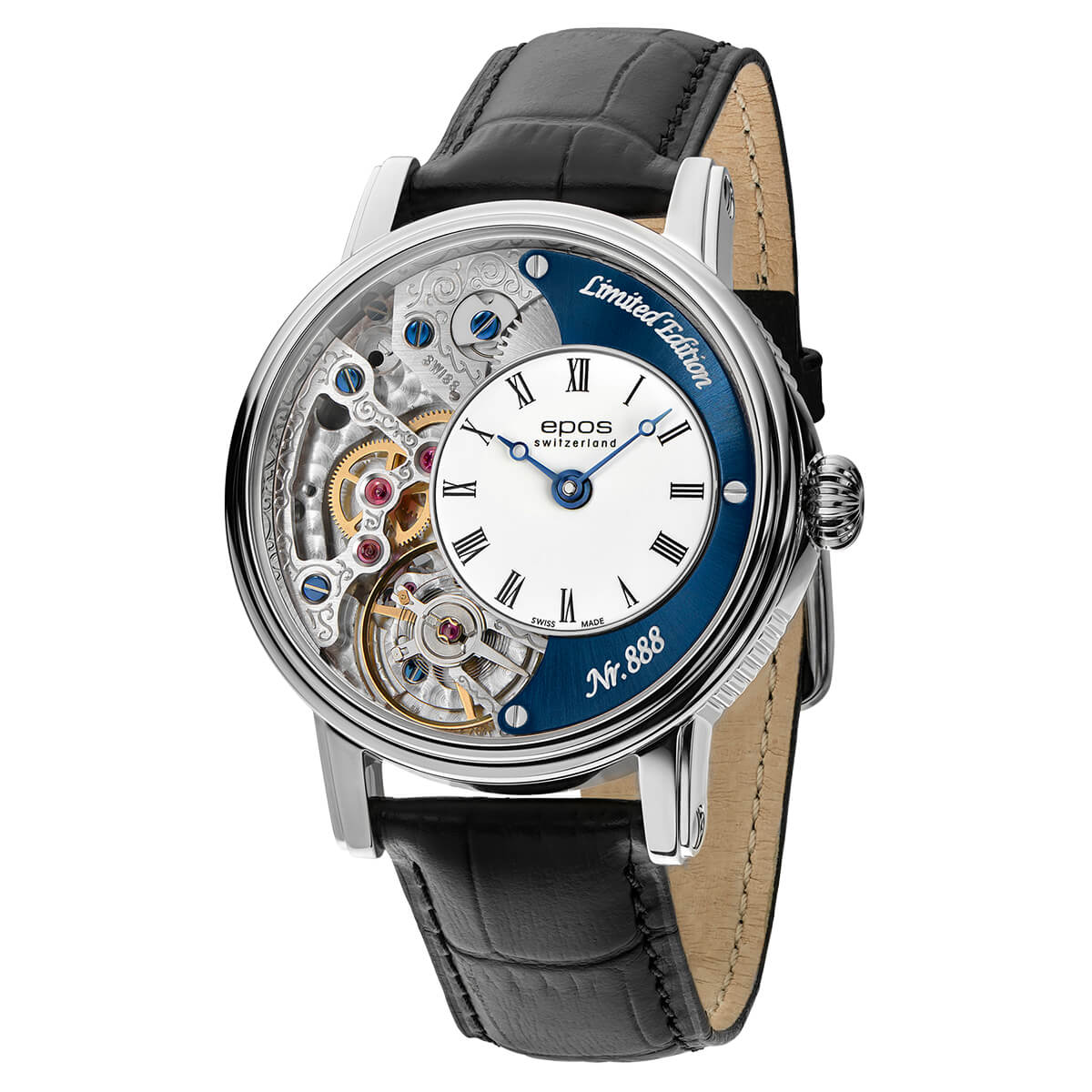
- History: Born from necessity in an era without electricity, the first manual watches were pocket-sized clocks for 18th-century aristocrats. Swiss legend Abraham-Louis Breguet transformed them into status symbols, crafting pieces for Marie Antoinette and Napoleon. The 1920s nearly killed them as automatics rose, but today, brands like EPOS Watches revive them for purists who crave connection to time’s heartbeat.
- How It Works: Picture a coiled snake (the mainspring) slowly uncoiling. Turning the crown tightens this spring. As it unwinds, energy flows through a labyrinth of jewelled gears, regulated by a lever escapement and a balance wheel beating 18,800 times per hour. The dance ends at the hands, which advance with a soft stutter. Accuracy: ±10 seconds/day – a small price for poetry.
- Care & Ritual: Wind daily, ideally at sunrise, to maintain torque. Stop when resistance stiffens (overwinding snaps springs). Store horizontally to distribute oils. Every 3 years, entrust it to a master watchmaker – dust and dried lubricants are silent killers.
- Examples: Patek Philippe Calatrava, EPOS Emotion 3390 (a minimalist masterpiece), Emile Chouriet Classic Purity, Vacheron Constantin Patrimony, A. Lange & Söhne Saxonia.
- Price: £1,500 – £100,000+ (Breguet’s antique originals fetch millions).
High-Beat Mechanical
- History: In 1969, as astronauts landed on the moon, Zenith’s engineers raced to launch the El Primero – “the first” high-beat movement (36,000 vph). Designed to measure elapsed time to 1/10th of a second, it survived the Quartz Crisis when Rolex adopted it for the Daytona. Grand Seiko’s 1968 Hi-Beat 61GS cemented Japan’s place in haute horlogerie.
- How It Works: A balance wheel oscillating at 28,800 – 36,000 vph divides time into finer slices, reducing errors from shocks or positional changes. The escapement’s rapid purr makes the seconds hand glide like oil. Accuracy: ±5 seconds/day.
- Care & Ritual: Handle like a Fabergé egg – high-speed parts wear faster. Service every 2 years. Avoid jogging or tennis; these movements hate shocks. Ideal for desk divers who admire precision but rarely dive.
- Examples: Zenith Chronomaster, Grand Seiko Hi-Beat 36000, TAG Heuer Carrera Chronograph.
- Price: £4,000 – £25,000.
Tourbillon
- History: In 1801, Abraham-Louis Breguet patented the tourbillon to counteract gravity’s distortion of pocket watches. For 150 years, it remained a rare curiosity – until the 1980s, when Audemars Piguet’s Royal Oak Tourbillon turned it into a billionaire’s trophy. Modern brands like Greubel Forsey now push its limits with multi-axis designs.
- How It Works: Imagine a tiny carousel (French: tourbillon) spinning the escapement and balance wheel in a cage. Every 60 seconds, it completes a rotation, averaging out gravity’s distortions. Modern versions use titanium cages and magnetic-resistant alloys. Accuracy: ±3 seconds/day.
- Care & Ritual: Never wear it while playing tennis. Store dial-up in a temperature-controlled safe. Service annually – only certified masters should touch this horological ballet.
- Examples: Breguet Classique Tourbillon, Audemars Piguet Royal Oak Tourbillon, Richard Mille RM 27-04.
- Price: £80,000 – £3 million (Richard Mille’s Rafael Nadal edition: $1.2 million).
 |
 |
-
Everything You Need to Know About Watch Movements – Automatic Movements (Self-Winding Mechanical)
Automatics are horology’s answer to perpetual motion. Born from the kinetic energy of human activity, they turn the mundane – typing, walking, gesturing – into a power source. No batteries, no winding keys – just the quiet whirl of a rotor mirroring your life’s cadence. They are for the modern romantic who wants craftsmanship without the chore.
Traditional Automatic – The Wearer’s Symphony
- History: In 1923, John Harwood – a Lancashire watchmaker inspired by children’s spinning tops – created the first automatic wristwatch. Rolex perfected it in 1931 with the Perpetual rotor, a semi-circular weight that pivots 360°. By the 1950s, automatics dominated luxury watches, symbolizing postwar optimism. Today, brands like Swiss Military by Chrono use it for rugged tool watches that thrive on adventure.
- How It Works: The rotor swings like a pendulum with your arm’s motion, winding the mainspring via a series of reverser gears. A slipping clutch prevents overwinding. Accuracy: ±10 seconds/day – reliable as a sunrise.
- Care & Ritual: Wear it daily or let it sleep in a winder. Every 3 months, let it rest for 24 hours to preserve lubricants. Avoid magnetic fields (laptops, speakers).
- Examples: Swiss Military Automatic Diver, Rolex Submariner, Omega Seamaster, Tudor Black Bay.
- Price: £800 – £50,000.
Micro-Rotor Automatic
- History: In 1955, Universal Genève’s Polerouter (designed by a 23-year-old Gerald Genta) debuted the micro-rotor for pilots crossing polar zones. Thin yet robust, it became the blueprint for luxury dress watches. Piaget later mastered the art with the 1960 Altiplano, a 2.35mm-thin marvel.
- How It Works: A rotor the size of a fingernail sits embedded in the movement, not atop it. This slims the watch to under 8mm thick. Accuracy: ±8 seconds/day.
- Care & Ritual: Perfect for cuff-friendly dress watches. Wind manually once a week if you are sedentary. Service every 4 years.
- Examples: Piaget Altiplano, Patek Philippe Golden Ellipse, Chopard L.U.C. XPS.
- Price: £7,000 – £60,000.
Peripheral Rotor Automatic
- History: BVLGARI shattered records in 2014 with the Octo Finissimo Tourbillon, using a peripheral rotor to achieve a jaw-dropping 1.95mm thickness. This design lets admirers gaze into the movement’s soul without rotor obstruction.
- How It Works: The rotor circles the movement’s edge like a hula hoop, driven by ceramic ball bearings. Accuracy: ±6 seconds/day.
- Care & Ritual: Ideal for sleek, modern designs. Handle like an origami swan – thin movements bruise easily.
- Examples: Cover Luxe Periphery, BVLGARI Octo Finissimo, H. Moser & Cie. Streamliner, Parmigiani Fleurier Tonda PF.
- Price: £12,000 – £100,000.
High-Beat Automatic
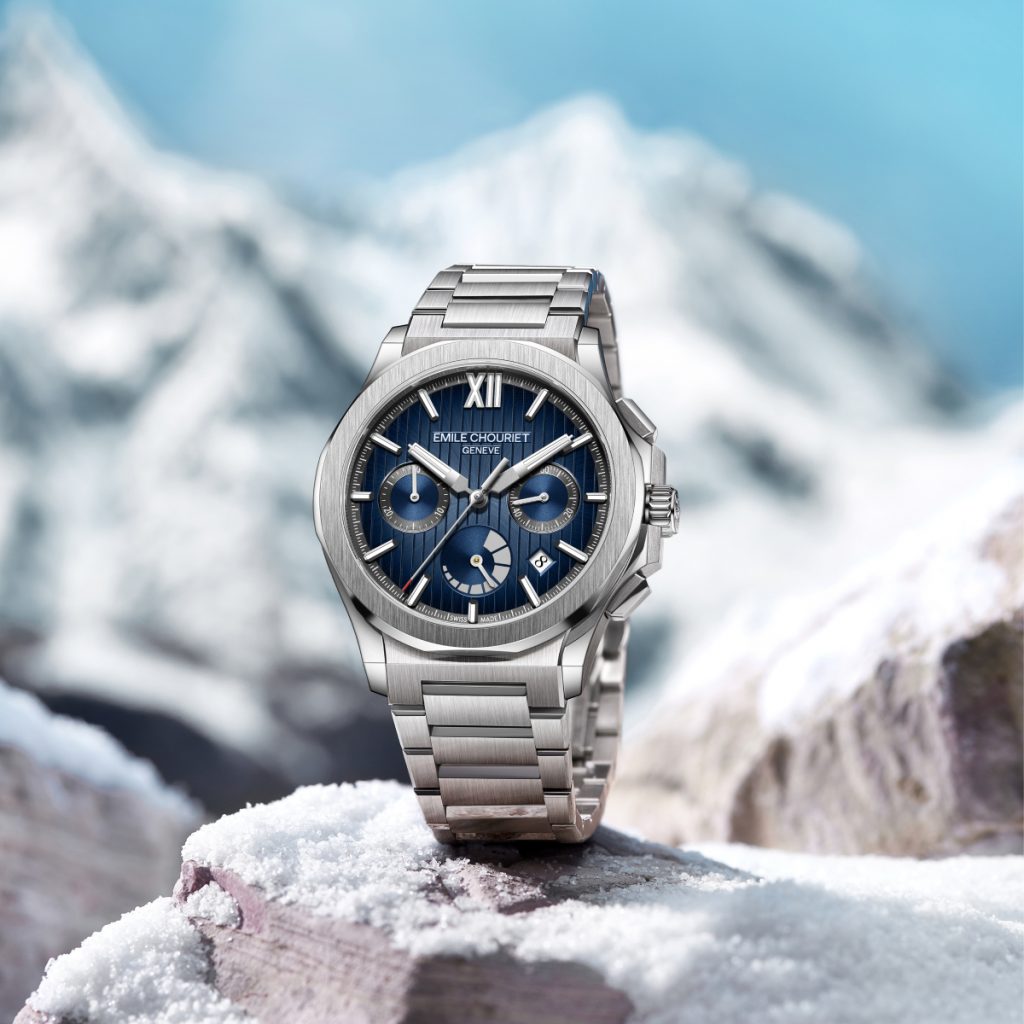
- History: In 1968, as Japan’s bullet trains roared to life, Grand Seiko launched the 61GS – a high-beat automatic challenging Swiss dominance. Its 36,000 vph movement became Japan’s national icon. In 2017 Zenith Defy Lab reimagined it with a monolithic silicon oscillator. Today, Emile Chouriet blends Swiss flair with this tech in their Chronometer HB.
- How It Works: Combines a tungsten rotor with a high-frequency escapement and a hairspring oscillating 10 times per second. The result? A second’s hand so smooth it looks liquid. Accuracy: ±3 seconds/day.
- Care & Ritual: Service every 2 years. Perfect for CEOs and surgeons – people who demand precision but hate winding.
- Examples: Emile Chouriet Chronometer HB, Grand Seiko SBGH267, Zenith Defy Lab, TAG Heuer Carrera Chronograph.
- Price: £5,000 – £35,000.
 |
-
Everything You Need to Know About Watch Movements – Quartz Movements (Battery-Powered)
The Silent Revolution Quartz movements are the unsung heroes of horology – affordable, accurate, and unkillable. Born from a 1960s space-age arms race, they democratized precision, turning Swiss giants into underdogs overnight. Forgettable? Never. Your microwave hums at 2.45 GHz; a quartz crystal vibrates at 32,768 Hz, slicing time into perfect fragments.
Standard Quartz
- History: On Christmas Day 1969, Seiko’s Astron debuted – the first quartz watch. Priced like a Toyota Corolla (circa ¥440,000), it shocked Switzerland, triggering the “Quartz Crisis”, bankrupting 1,000’s Swiss brands. By 1985, 90% of watches sold were quartz. Today, it is 95%.
- How It Works: A battery sends current to a quartz crystal, vibrating at 32,768 Hz. An integrated circuit counts these oscillations, pulsing a motor to advance the hands. Accuracy: ±15 seconds/month.
- Care & Ritual: Replace batteries every 2 years (leaky ones corrode circuits). Rinse under water if waterproof. Indestructible for daily grind.
- Examples: EverSwiss Elegance Quartz, Swiss Military Field Quartz, Casio F-91W, Timex Weekender, Tissot PRX Quartz.
- Price: £50 – £1,000.
Solar Quartz
- History: In 1976, as oil crises gripped the world, Citizen launched the Eco-Drive, a watch powered by light. Early models used clunky solar panels; today’s versions hide cells under sapphire crystals.
- How It Works: Photovoltaic cells under the dial soak up light (even candlelight!), storing energy in a lithium-ion cell. Accuracy matches standard quartz, ±15 seconds/month.
- Care & Ritual: Charge monthly under a lamp. Avoid dark drawers – it is a sunflower in watch form.
- Examples: Swiss Military Solar Sport, Citizen Promaster Eco-Drive, Seiko Prospex Solar.
- Price: £150 – £2,000.
Kinetic Quartz
- History: Seiko’s 1988 Kinetic merged quartz precision with mechanical romance. Early models whirred like angry bees; modern ones are silent.
- How It Works: A rotor (like automatics’) spins as you move, generating electricity stored in a capacitor. Accuracy: ±15 seconds/month.
- Care & Ritual: Wear it or shake it weekly. Replace the capacitor every 10 years (cheaper than a service).
- Examples: Seiko Kinetic Direct Drive, Tissot T-Touch.
- Price: £250 – £1,500.
Spring Drive
- History: Seiko spent 28 years and $110 million perfecting Spring Drive, a movement so unique it’s patented until 2033. Part mechanical, part quartz, it is the platypus of horology – defying categories.
- How It Works: A mainspring drives gears, while a quartz oscillator controls an electromagnetic brake. The seconds hand doesn’t tick – it glides. Accuracy: ±1 second/day.
- Care & Ritual: Wind it every 48 hours if idle. Service every 5 years at Seiko’s Shizukuishi studio. (Seiko’s labs are the only ones qualified).
- Examples: Grand Seiko Snowflake, Credor Eichi.
- Price: £3,000 – £50,000.
Radio-Controlled Quartz
- History: In 1991, Casio’s Wave Ceptor tapped into Germany’s DCF77 atomic clock signal, syncing watches via radio waves. Citizen’s 1993 Multi-Band added global reception.
- How It Works: At 2 AM, the watch “listens” for atomic clock signals (Germany’s DCF77, Japan’s JJY), auto-adjusting time. Accuracy: ±1 second every 100,000 years.
- Care & Ritual: Live near a signal tower? Perfect. In rural Patagonia? Stick to manual mode.
- Examples: Cover Atomic Sync, Casio Wave Ceptor, Citizen Attesa.
- Price: £300 – £3,000.
GPS-Synchronized Quartz
- History: Citizen’s 2011 Satellite Wave used GPS satellites to sync time globally – ideal for pilots, spies, and digital nomads.
- How It Works: Press a button; the watch pings GPS satellites, adjusting to your exact location and atomic time. Accuracy matches radio models.
- Care & Ritual: Sync monthly under open skies. Solar-powered? Charge it like a vampire fears dawn.
- Examples: Citizen Promaster Aqualand GPS, Casio G-Shock GPS.
- Price: £800 – £5,000.
 |
 |
-
Everything You Need to Know About Watch Movements – Hybrid & Smart Movements
Bridging Centuries Hybrids are the shape-shifters of watchmaking – mechanical charm with silicon brains. Born in the 2010s, they answer a burning question: Can a watch track your heartbeat without losing its soul? For the tech-savvy traditionalist, they are horological centaurs.
Mecha-Quartz
- History: In the 1990s, Seiko’s VK64 movement let budget brands offer chronographs with mechanical “feel.”
- How It Works: Quartz runs the time; mechanical modules control the chronograph. Press the start button, and the seconds hand snaps like a mousetrap. Accuracy: ±15 seconds/month.
- Care & Ritual: Avoid pressing buttons underwater. Replace batteries every 3 years.
- Examples: Seiko Speedtimer, Yema Rallygraf, Hamilton Khaki Field Chrono.
- Price: £300 – £1,500.
Smartwatch Hybrid
- History: Withings’ 2014 Activité looked like a French dress watch but tracked sleep and steps. Fossil and Kronaby now blend classic looks with smartphone alerts, brands like Garmin blend analogue hands with fitness tracking – perfect for boardrooms where Apple Watches feel gauche.
- How It Works: Mechanical hands show time, while a hidden e-ink screen displays notifications. Bluetooth connects to phones; some track heart rate via optical sensors.
- Care & Ritual: Charge weekly via USB-C. Avoid saunas – steam kills circuits.
- Examples: Garmin Vivomove, Fossil Hybrid HR, Mondaine Helvetica Smart, Kronaby.
- Price: £200 – £1,500.
Time is What You Make It
Whether you choose the ancestral tick of an EPOS manual wind or the atomic precision of a Citizen Satellite Wave, your watch movement is a manifesto. It whispers, This is how I value time. Mechanicals are for those who savour life’s winding path; quartz for the pragmatist; hybrids for the futurist.
Pro Tip: Visit a watchmaker. Feel the heft of a rotor, hear the purr of a tourbillon. Let your heart – not specs – decide. After all, the best movement is not the most precise or expensive – it is the one that makes you glance at your wrist and smile.
A watch is a companion, not just a tool. Service it, cherish it, and let it mark your moments – from first steps to last dances.
We hope our blog post about Everything You Need to Know About Watch Movements has been insightful and will help you choose the right watch to suite your needs and requirements.
Tick wisely. Live fully.